Why do some brands keep customers engaged for years while others lose them in seconds? The answer lies in how you build the customer journey. This guide is for those who want to understand advertising strategy — not just push buttons in an ad dashboard.
What This Article Covers
Imagine this: you launch ads, spend your budget, get clicks — but no sales. Or sales that cost way too much. Sound familiar?
The problem is that most advertisers try to sell directly to people who don’t even know their product exists yet. It’s like approaching a stranger on the street and proposing marriage. They’ll probably run away.
Advertising isn’t about “set it and forget it.” It’s about building relationships. And for those relationships to work, you need to understand where your potential customer is in their journey.
In this article, I’ll break down:
- What a sales funnel is and why it’s shaped like a funnel
- The See-Think-Do-Care model — how to guide customers from awareness to purchase
- Why modern buyers don’t follow a linear path and how to work with that
- Flywheel — the evolution of the funnel for building long-term business
Glossary: Key Terms Explained Simply
Before diving in, let’s clarify some basic concepts. If you already know these terms, feel free to skip ahead.
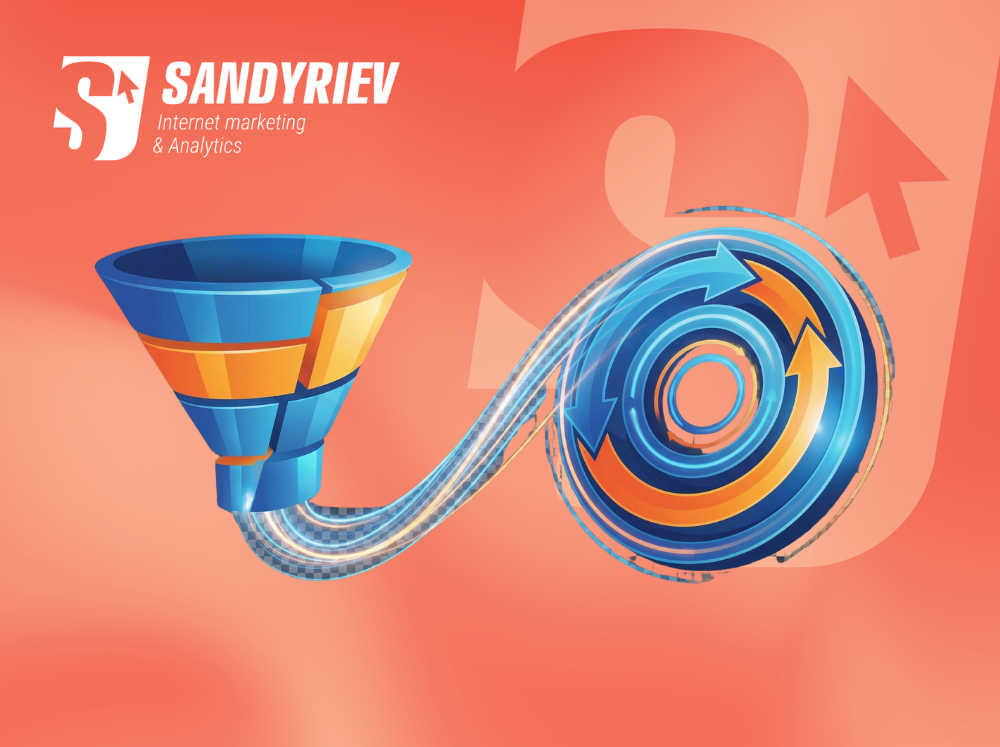
Sales Funnel — the path a customer takes from first hearing about you to making a purchase. There are always more people at the top than buyers at the bottom — hence the “funnel” shape. Picture a funnel: wide at the top, narrow at the bottom.
Lead — a potential customer who has shown interest: left their phone number, filled out a form, sent a message. They haven’t bought yet, but they’ve “raised their hand.”
Target Audience — the group of people who might be interested in your product. Not “everyone aged 18-65,” but specific people with specific problems.
Conversion — a valuable action on your site: purchase, call, inquiry, subscription. The thing you’re actually running ads for.
Remarketing (Retargeting) — technology that shows ads to people who’ve already visited your site. You’re “following up” with people who showed interest but didn’t buy.
Cold, Warm, Hot Audience:
- Cold — knows nothing about you, may not even be aware of their problem
- Warm — interested, comparing options
- Hot — ready to buy right now, looking for the best deal
The Marketing Triangle: Three Elements of Successful Advertising
There’s an old but still relevant concept — the 3M rule (Market, Message, Media). Every successful ad is built on three elements:
1. Market — who are we selling to? This is about the right audience. Not “everyone,” but specific people with specific needs.
2. Message — what are we saying? This is about the right offer. Not “we’re the best in the market,” but a specific benefit for the customer.
3. Media — where are we showing it? Search, social media, YouTube, email — each channel has its own specifics.
As American marketer Dan Kennedy said: “There are many ways to make the marketing triangle weak, and only one way to make it strong — the right message, to the right person, in the right place.”
You might have a brilliant product, but if you show it to the wrong people or in the wrong place — no results. And vice versa: an average product with the right positioning can outperform competitors.
Who Is Your Customer? Why “Everyone” Means No One
One of the most common mistakes: “My target audience is men and women aged 25 to 50.” That’s not an audience. That’s half the country’s population.
Even bread isn’t bought by everyone. Some are on gluten-free diets, some bake their own, some don’t eat carbs at all. If even bread has limitations, your product certainly does too.
Men aged 25-50 are completely different people. A 25-year-old student and a 50-year-old company director have different incomes, interests, problems, and decision-making processes. Selling to them the same way is guaranteed failure.
How to Create an Ideal Customer Profile
You need to answer several questions:
Demographics:
- Age, gender, location
- Occupation, income level
- Family status
Interests and Lifestyle:
- What are their hobbies? Fishing, football, fashion, technology?
- How do they spend free time?
- Which social networks do they use?
Pain Points and Motivation:
- What problem do they want to solve with your product?
- What concerns them?
- Why are they looking for a solution right now?
Practical tip: don’t invent profiles from scratch. If possible, look at real customers. Check their social media profiles, see what they’re into, what they post, what they react to. This will give you more insights than any theory.
If your business already has customers — talk to them. Ask why they chose you, what concerned them before buying, what they like now. This information is gold for your advertising.
The See-Think-Do-Care Model: Four Stages of the Customer Journey
Now let’s get to the main point — how to build the customer journey from first contact to purchase and beyond.
The See-Think-Do-Care model was popularized by Avinash Kaushik — a renowned web analytics expert. The concept is simple: people at different stages of purchase readiness need different approaches.
Stage 1: SEE (Awareness)
Who these people are: the widest audience. People who don’t know about you yet and may not even realize they need your product.
Their state: they have a potential problem, but they’re not thinking about it yet. Or they’re thinking about it but not actively seeking solutions.
Your goal: reach as many people as possible, make yourself known, be memorable. Don’t try to sell directly — it won’t work.
What to do:
- Use eye-catching creatives that grab attention
- Evoke emotions or curiosity
- Ask questions that resonate with the audience
Example messages:
- “Want to relax this summer but don’t know where?”
- “Tired of spending hours in the kitchen?”
- “Could your business grow faster?”
Important nuance: at this stage, we exclude people who’ve already visited our site. Why pay to show ads to people who already know you? There are other funnel stages for them.
How to measure results: at the SEE stage, we don’t expect sales. We look at reach (how many people saw the ad) and engagement (how they reacted, whether they clicked). If there are no conversions at this stage — that’s normal.
Stage 2: THINK (Consideration)
Who these people are: those who’ve realized they have a problem and started looking for solutions. They’re “shopping around,” comparing options.
Their state: they know they want to change something, but haven’t decided what exactly or from whom to buy. They’re researching the market.
Your goal: spark interest in your offer, show advantages, provide useful information.
What to do:
- Show product benefits, explain features
- Provide helpful content that aids decision-making
- Use remarketing — show ads to those who were at the SEE stage
Example messages:
- “5 criteria for choosing an air conditioner for your apartment”
- “Comparison: which furniture material is better?”
- “How to choose a contractor for renovations without regrets”
What should be on your site: detailed product information, comparisons with alternatives, answers to common questions, customer reviews.
How to measure results: look at site engagement (pages viewed, time spent), newsletter signups, material downloads. First leads may appear, but this isn’t the main metric yet.
Stage 3: DO (Purchase)
Who these people are: “hot” customers. They know exactly what they want to buy and are looking for where to do it faster or cheaper.
Their state: the purchase decision is already made. The only question is who to buy from.
Your goal: get the inquiry or sale. Convince them to buy from you, and right now.
What to do:
- Show specific benefits: price, discount, warranty, free shipping
- Create urgency: limited offer, only X items left
- Use remarketing for cart abandoners or those who viewed specific products
Example messages:
- “20% off this week only”
- “Free shipping on orders over $50”
- “Only 3 left at the old price”
Important point: for someone to buy right now, three things must align:
- Need — they actually need this product
- Ability — they can afford it
- Urgency — there’s a reason to buy now, not later
If any element is missing — the sale won’t happen. No urgency? Create it with a promotion. No ability? Offer financing.
How to measure results: now we look at the main metrics — number of inquiries, sales, customer acquisition cost, ad ROI.
Stage 4: CARE (Loyalty)
Who these people are: those who’ve already bought from you.
Why this matters: selling to an existing customer is 5-7 times cheaper than acquiring a new one. Plus, satisfied customers bring friends.
Your goal: make the customer return, recommend you to others, become a brand advocate.
What to do:
- Thank them for the purchase (seems obvious, but many forget)
- Offer related products after some time
- Create a loyalty program
- Periodically remind them of yourself with useful content
Example actions:
- Bought a fishing rod? Offer bait a month later
- Bought a phone? Offer accessories
- Used your service? Ask for a review and give a bonus for the next order
The sad truth: most businesses completely ignore this stage. Before purchase, they pamper the customer, promise the moon. After purchase — they forget about them until the next time they reach out (if they do).
Then they wonder why customers go to competitors and why there are no referrals. The answer is simple: you didn’t take care of the customer after the sale.
Funnel in Action: How Infomercials Sell
Want to see a perfect sales funnel in action? Watch any infomercial like those for kitchen gadgets. Seriously, they build the structure brilliantly.
Opening (SEE — grab attention):
The host starts with pain: “Too many kitchen gadgets? Don’t know where to store them? Tired of kitchen chaos?” These moments are even shown in black and white — building tension.
Development (THINK — spark interest):
“But there’s a solution!” — and the product demonstration begins. They show how it works, what problems it solves, how simple and convenient everything is. This is the colorful picture, positivity, smiles.
Climax (DO — sell):
At the end — call to action with urgency: “Today only! Instead of $99 — just $77! And if you call right now — you’ll also get this and this as a gift!”
Notice: they hold viewers for 10 minutes. Ten minutes of a commercial! And people watch until the end. Why? Because the structure is built correctly: first they hook the pain, then show the solution, then create urgency.
These same principles work in any advertising — online or offline.
Why Modern Buyers Don’t Follow a Linear Path
There’s one problem with the classic funnel: it assumes customers move sequentially from stage to stage. SEE → THINK → DO → CARE. Beautiful and logical.
But reality is different.
Imagine: you’re looking for a new phone. First you see an ad on Instagram. Then read reviews on YouTube. Ask friends in a messenger. Visit a website, check specs. Go to a physical store to hold it in your hands. Return home, compare prices. See another ad — from a competitor. Doubt again.
A week later you get an email reminder about your abandoned cart. Another day passes, you see the same model with a friend — they’re happy with it. Finally you buy. But not where you originally planned.
This is the real path of a modern buyer. It’s not linear. It’s a web of dozens of touchpoints across different platforms.
What This Means for Your Advertising
1. You need presence across multiple channels
If you’re only in one place — you’re losing customers. Someone might see you on Instagram but buy through search. Or vice versa.
2. Consistent messaging matters
If you’re saying different things in different channels — it’s confusing. Your brand should be recognizable and consistent everywhere.
3. Every touchpoint counts
You can’t evaluate effectiveness only by last click. If someone saw your ad 5 times before buying — all 5 impressions matter, not just the last one.
4. Remarketing isn’t optional — it’s essential
Most people don’t buy on the first visit. If you don’t follow up — they’ll simply forget and go to a competitor who did.
From Funnel to Flywheel: Evolution of Thinking
The classic funnel has another problem: it ends at the sale. Customer bought — and dropped out of the system. As if they no longer exist.
But we already discussed: an existing customer is the cheapest source of new sales. And the best source of new customers through referrals.
That’s why modern marketers increasingly talk about the Flywheel model — a wheel instead of a funnel.
How the Flywheel Works
Imagine a flywheel — a heavy wheel that spins. To get it spinning, you first need to apply effort. But once it gains momentum — it spins on its own, and each push adds more speed.
In marketing it works like this:
- You attract a customer (invest energy)
- Customer buys and is satisfied
- Satisfied customer returns and recommends you to others
- New customers come with lower acquisition costs
- The cycle repeats, the flywheel spins faster
Key difference from funnel: the customer doesn’t “drop out” after purchase. They become part of a system that brings new customers.
Three Forces That Spin the Flywheel
Attract
This is your content, advertising, SEO — everything that brings new people. But now there’s another channel: recommendations from existing customers.
Engage
This is your interaction with the customer: how you answer questions, how your site works, how easy it is to buy. Every touchpoint should be positive.
Delight
This is the post-purchase experience: product quality, support, additional value. When a customer gets more than expected — they tell others.
What Slows the Flywheel
Friction. Everything that creates negative experience:
- Complicated purchase process
- Poor support
- Low-quality product
- Broken promises
- Ignoring customers after the sale
One negative review can stop a flywheel you’ve been spinning for months. That’s why it’s important not just to attract new customers, but to minimize friction at every stage.
How to Combine Funnel and Flywheel
These models don’t contradict each other. See-Think-Do-Care funnel is tactics — how to guide a specific customer. Flywheel is strategy — how to build the overall system.
Practically this means:
- Use funnel stages for planning ad campaigns
- But don’t forget about the CARE stage — it feeds the entire flywheel
- Build in mechanisms for getting reviews and referrals
- Measure not just new sales, but repeat purchases and LTV (customer lifetime value)
Practical Tips: How to Implement This in Your Business
1. Start with customer profile
Don’t skip this step. Without understanding who you’re selling to — nothing else makes sense. Take time, talk to real customers, look at their social media profiles.
2. Separate ads by funnel stages
Don’t mix advertising for cold and hot audiences in one campaign. They need different messages, different creatives, different landing pages.
3. Create different landing pages
For SEE stage — a page that talks about the problem and your solution in general. For DO stage — a page with specific offer, price, “Buy” button.
4. Set up remarketing
This is a must-have. Collect audiences: who visited the site, who viewed certain pages, who abandoned cart. Show them different ads depending on where they stopped.
5. Don’t forget about existing customers
Create a separate audience of those who already bought. Show them ads for related products, special offers for loyal customers. Ask for reviews.
6. Measure the right metrics at each stage
- SEE: reach, brand awareness
- THINK: engagement, time on site, signups
- DO: conversions, sales, acquisition cost
- CARE: repeat purchases, LTV, NPS (loyalty index)
7. Be consistent
A funnel isn’t a one-time campaign. It’s a system that works constantly. Customers enter at different stages, move at different speeds. Your advertising should be ready to meet them at any moment.
Common Mistakes and How to Avoid Them
Mistake 1: Selling directly to cold audience
Someone sees your ad for the first time — and you’re already offering “Buy now with 20% discount.” They don’t even know what you sell or why they need it.
Solution: at SEE stage — introduction, not selling.
Mistake 2: Judging all advertising by sales
A reach campaign didn’t bring sales — so it’s ineffective? No. It did its job — introduced people to the brand. Sales will come later, at other stages.
Solution: different metrics for different funnel stages.
Mistake 3: Ignoring remarketing
“Why show ads to people who already visited the site? They’ve seen it.” Because they didn’t buy. And if you don’t remind them — they’ll forget and go to a competitor who did.
Solution: set up remarketing as a mandatory part of strategy.
Mistake 4: Forgetting customers after purchase
Sold — forgot. Then wonder why there are no repeat purchases and referrals.
Solution: CARE stage isn’t optional. It’s an investment in future sales.
Mistake 5: Same message for everyone
One ad for everyone is wasting budget. Hot customers don’t need to hear about the problem — they already know. Cold customers don’t need a discount — they haven’t yet understood why they need it.
Solution: segment audience and prepare different messages.
Key Takeaways
1. Advertising is about building relationships, not one-time sales.
Don’t try to marry on the first date. First introduce yourself, then spark interest, and only then propose buying.
2. Different people at different stages need different approaches.
Cold, warm, hot audiences — these are three different ad campaigns with different messages.
3. The customer journey isn’t linear.
They jump between channels, return, doubt. Be ready to meet them at any point.
4. The customer doesn’t end at purchase.
CARE stage isn’t charity — it’s investment. A loyal customer costs many times less than a new one.
5. Flywheel is the next level of thinking.
When satisfied customers bring new customers — your marketing works for itself.
6. Everything starts with understanding the customer.
Without a target audience profile, all strategy is just guesswork.
If this article was helpful — share it with colleagues. And if you want to work through a sales funnel for your business — reach out to me.
🎬 Video: Complete Funnel Breakdown
This is a recording of my webinar where I break down the See-Think-Do-Care model in detail with practical examples. If you want to dive deeper into the topic — watch the full version. Turn on English subtitles in the video settings (CC button).
🎯 Sales Funnel Diagnostic
Answer 8 simple questions about your business — and find out which funnel stage you should focus on first
Funnel Diagnostic
Answer honestly — this is for you, not anyone else
Frequently Asked Questions
Do I need to implement all funnel stages if I have a small budget?
No, not necessarily. If your budget is limited, start with the DO stage — targeting "hot" customers who are ready to buy right now. This way you'll see returns faster. Once you have revenue coming in, gradually add THINK and SEE stages to expand your audience.
How long does it take for a funnel to start working?
It depends on your business and customer decision cycle. For simple, affordable products (clothing, cosmetics), you might see results within days. For complex products or services (renovations, B2B, expensive equipment), customers may need weeks or months to warm up. The key is not to expect immediate sales from cold audiences.
How do I know which funnel stage a specific person is at?
By their behavior. If someone visits your site for the first time and spends 20 seconds — they're at SEE stage, just getting acquainted. If they viewed multiple pages, compared products, read reviews — that's THINK, they're choosing. If they added items to cart or checked pricing pages — that's DO, they're almost ready to buy. That's why you need analytics: it shows what people actually do on your site.
I have a local business (café / salon / workshop). Does this apply to me?
Yes, the funnel works for any business — just the channels differ. For local businesses, SEE stage is when someone sees your sign or geo-targeted Instagram ad. THINK is reading Google Maps reviews. DO is visiting your location. CARE is giving them a loyalty card so they come back. Same principle, different scale.
What's more important — acquiring new customers or retaining existing ones?
Both, but most businesses focus too much on new customers and forget about existing ones. Consider this: acquiring a new customer costs 5-7 times more than selling to someone who already bought from you. Plus, satisfied customers bring friends for free. The smart strategy isn't choosing one or the other — it's building a system where new customers become regulars, and regulars bring in new ones.