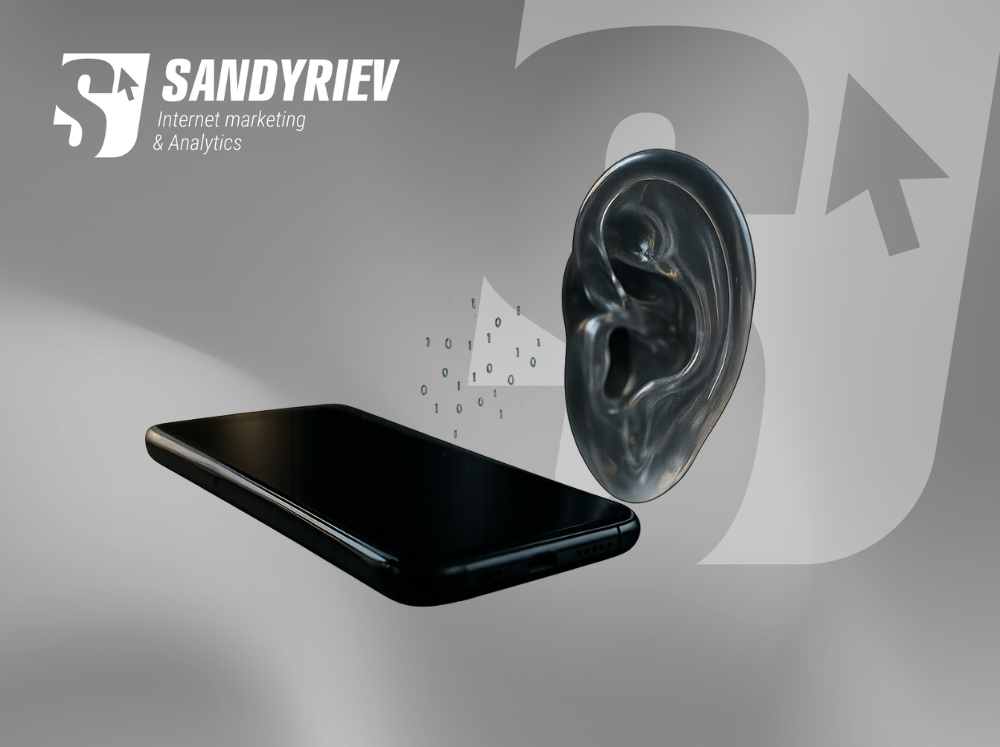
Imagine this: a system knows you’ll buy a red dress in size M in three days, even though you don’t know about your intention yet. It sees your future pregnancy 6 months before conception. It predicts divorce while you’re still happily married. And all this – without a single eavesdropped word.
Most people are convinced: if advertising is so accurate, phones must be listening to conversations. But in reality, algorithms have learned to read between the lines of your digital life so well that eavesdropping has simply become unnecessary. And here’s why this is far more terrifying than any conspiracy theories about secret microphones.
Official Statements vs. Independent Research
Large companies have repeatedly debunked this myth. For example, Facebook officially stated back in 2016: “Facebook does not use your phone’s microphone to inform ads… We show ads based on people’s interests and information in their profile – not what you’re talking about out loud.”
Of course, we shouldn’t trust the platforms’ own statements. So let’s analyze independent scientific research and technical experiments that debunk the mass surveillance myth.
Experimental Evidence of No Eavesdropping
Wandera Research (2019)
Cybersecurity specialists conducted experiments trying to determine whether apps “listen” to microphones secretly from users. In 2019, Wandera company conducted a demonstration test: two phones (iPhone and Samsung) were placed nearby, and for 30 minutes daily they played audio recordings of pet food ads.
For experimental purity, all popular apps were given microphone access permissions. Then results were compared with a control period when phones lay in silence.
Experimental results:
- No pet food ads appeared in any app afterward
- No noticeable difference in traffic consumption between “noisy” and quiet modes
- No difference in battery drain
- No difference in background app activity
This is a key observation: if an app were secretly recording and sending audio to servers, there would be noticeable anomalous data and energy consumption. None was detected.
Engineer James Mack from Wandera noted that all tested apps consumed orders of magnitude less data than a voice assistant during the same period, meaning no constant recording and uploading of conversations was occurring.
Mathematical Calculations of Mass Surveillance Impossibility
Former Facebook product manager Antonio García-Martínez also calculated that if smartphones continuously streamed audio to servers, data volume would be about 130 MB per day per person, or 20 petabytes per day total for the US alone.
This is close to Facebook’s entire data storage capacity and practically impossible to implement covertly. Even attempts to assume “selective” eavesdropping on keywords run into the problem that tracking millions of potential triggers would instantly overload the phone’s processor and expose itself.
Northeastern University Study
Northeastern University research checked for secret app access to microphones. Scientists analyzed over 17,000 Android apps and found no cases of unauthorized microphone activation.
However, they discovered other alarming things: some apps made hidden screenshots and sent them to third parties (one even recorded screen video). This may pose an even greater privacy threat than hypothetical eavesdropping on random conversations, since screenshots can reveal the content of your messages or browser activity.
Why We Think We’re Being “Eavesdropped On”
The thing is, our smartphone collects a huge amount of other personal data without eavesdropping, allowing advertising algorithms to guess our needs.
Your phone doesn’t eavesdrop on you 24/7, but it can track you in dozens of other ways. Thanks to this ocean of data, companies like Facebook and Google show ads that sometimes frighteningly match your recent interests.
How Advertising Algorithms Guess Our Interests Without Eavesdropping
If smartphones don’t record conversations, how does advertising become so relevant? The secret lies in the power of advertising algorithms and abundance of data about your digital behavior.
Modern advertising systems (Meta, Google, etc.) collect information about users from multiple sources. Every like, click, search, geolocation, loyalty card purchase – all of this feeds the algorithm.
Data Sources for Targeting
Demographics and Social Connections: Facebook knows your demographics, circle of friends and interests, pages you like, and can even correlate data about your activity on external sites through pixels and cookies.
Geolocation and Movement: Smartphone GPS data reveals which stores or places you visit. The system knows your location, understands who you’re frequently near (and can assume shared interests of these people).
Online Behavior: Google search history clearly indicates your intentions. Online purchases and browsing reveal what products you’re considering.
Offline Data: Retail chains link loyalty card purchases to phones or emails, then use this data in targeting too.
Communication Metadata: On Android devices, Facebook previously even collected call and SMS metadata (who called when).
Algorithm Operation Example
A frightening example: algorithms can determine that you and your friend discussed a wedding without eavesdropping on the conversation, by analyzing that you’re together, you both communicate with a third friend preparing for a wedding, you recently viewed related pages, etc. As a result, you’ll see wedding suit tailoring ads exactly when the topic is relevant to you.
Platforms also use more subtle signals. According to some data, algorithms can detect indirect signs, such as changes in frequency and timing of app usage. There’s even a legend that Facebook can guess a woman’s pregnancy from her feed scrolling patterns long before official announcement.
New Restrictions: Cookie Abandonment and Privacy Enhancement
Despite all the power of advertising algorithms, these systems have faced serious limitations due to privacy changes. In recent years, users and regulators are increasingly concerned about “how does the platform know so much about me?”
Third-Party Cookie Blocking
Traditionally, ad networks tracked users across the internet using third-party cookies – small identifiers that advertiser sites store in your browser.
However, such cross-site trackers came to be seen as privacy threats. Regulators declared that cookies capable of identifying a person are equivalent to personal data and require user consent (as interpreted by European GDPR).
Browsers also began tightening policies:
- Safari and Firefox first disabled third-party cookies by default several years ago
- Google Chrome will disable them for 100% of users by end of 2024
Impact of Apple Changes on Advertising
In 2021, Apple dealt a serious blow to ad tracking by releasing App Tracking Transparency (ATT) for iPhone. Now every app must ask users for permission before tracking their activity “across other apps and websites.”
Over 95% of iPhone users denied tracking, by some estimates. Conversion data became harder to collect and properly attribute, and Facebook’s algorithms lost part of their “vision.”
Consequences for Ad Effectiveness:
- Average Facebook ROAS for online stores fell nearly 38% after ATT introduction
- Average cost per visit from ads increased 9% in one year
- Customer acquisition costs rose 19% over two years
Growing Importance of First-Party Data
Under new conditions, companies are betting on first-party data – information they collect directly from their customers with consent. Unlike third-party trackers, first-party data remains under the business’s own control.
This includes website registrations, purchase history, newsletter subscriptions, survey results, loyalty programs, etc. It’s more private (users provided it themselves) and doesn’t depend on external cookies.
This is exactly what I fix in my Google Analytics consulting work — tracking that respects consent and still gives you numbers you can trust.
Why Advertising Effectiveness Doesn’t Always Increase
We’ve established that modern algorithms and data allow advertising to be very precise. A logical question arises: if targeting becomes smarter, why don’t all advertising campaigns become more effective?
In practice, marketers notice that customer acquisition costs are rising while advertising returns stagnate or even fall, despite algorithmic miracles.
Main Reasons for Effectiveness Stagnation
Data and Signal Limitations: Strengthened privacy rules have cut available user information. Algorithms deprived of their usual signal volume sometimes work less effectively.
Growing Competition and Costs: Digital advertising is an auction system. The better the targeting tools, the more advertisers rush to the same valuable audience. This leads to rising ad display costs.
User Adaptation and Ad Fatigue: Users have become less receptive to banner advertising over time – a phenomenon known as banner blindness. Additionally, advertising oversaturation causes irritation.
Rapid Creative Burnout: Meta analyzed millions of impressions and concluded that ads “wear out” on audiences much faster than previously thought. Ad fatigue reduces response after just the first repeated showing of the same ad to one user. By the fourth showing to the same person, clickability drops 40% and conversion drops 60%.
Creative and Offer Quality: Meta discovered that creative quality and content affect results more than half the time (56% of success) – much stronger than fine-tuning targeting or bidding.
How to Check If Your Phone Is "Listening" — Run the Test Yourself
Skeptical? Good. You don't have to take anyone's word for it — including mine. Pick a product you have never searched for, never bought, and have no digital footprint around (an obscure one works best — say, "alpaca wool socks"). Say it out loud near your phone several times a day for three days. Don't type it. Don't search it. Don't message anyone about it. Then watch your feeds on Instagram, Facebook, and YouTube.
Across every controlled version of this experiment — including the Wandera and Northeastern studies cited above — the ads never appear. What does happen is the frequency illusion: once a topic is top of mind, you suddenly notice ads that were always in rotation. The test feels convincing precisely because your brain is now primed to hunt for a match. That's the myth's engine — not a microphone.
How to Limit Microphone and Ad Tracking (iOS & Android)
Even though there's no covert always-on recording, restricting microphone and ad-tracking access is sound privacy hygiene. Here's how to take control in under two minutes:
iPhone (iOS)
- Microphone: Settings → Privacy & Security → Microphone → toggle off any app that doesn't need it.
- Ad tracking: Settings → Privacy & Security → Tracking → turn off "Allow Apps to Request to Track," then Apple Advertising → turn off "Personalized Ads."
Android
- Microphone: Settings → Security & Privacy → Privacy → Permission manager → Microphone → set apps to "Don't allow."
- Ad tracking: Settings → Privacy → Ads → "Delete advertising ID" (or reset it).
This won't change your ad relevance much — and that's the point. The targeting runs on your behavioral data, not your voice.
Is It Even Legal for Apps to Secretly Listen?
No — and that's a core reason it doesn't happen at scale. Covert, always-on audio capture would violate U.S. federal wiretapping law (the ECPA), two-party-consent statutes in states like California, and the EU's GDPR, which requires explicit, specific consent to process audio. For a public company like Meta or Google, the legal exposure and reputational risk would dwarf any advertising upside — especially when behavioral targeting already predicts intent more cheaply and more accurately. The economics and the law point the same way: there's no business case for the microphone.
Conclusions
The myth about total smartphone eavesdropping for advertising is not supported by facts – neither technical analysis nor common sense confirm the existence of such mass espionage.
But there’s not much to be reassured about either: the truth is much more complex and sometimes alarming. Ad networks don’t need eavesdropping because they already possess detailed portraits of each of us, assembled from digital traces.
Algorithms constantly improve to predict our desires and intentions based on this data. However, they face new barriers – society and laws demand greater privacy, former tracking mechanisms like cookies are being disabled, users are more selective about sharing information.
Marketing is adapting, betting on first-party data and new targeting methods, trying to balance personalization with privacy respect.
At the same time, advertising effectiveness isn’t just an algorithm question. It can find “your” consumer, but to hold their attention and actually achieve a sale requires competent strategy, creative approach, and good product.
Algorithmic miracles are real, but they’re not omnipotent: there will always be room for human factors and changing market conditions in the advertising equation.
Main conclusion: our phone doesn’t secretly eavesdrop on our conversations; advertising systems have simply learned to read between the lines of our lives, and this must be considered when building both user expectations and marketing strategies for the future.
Sources:
- Wandera mobile security research (2019)
- Northeastern University app privacy study (17,000+ Android apps analysis)
- Antonio García-Martínez calculations (former Facebook Product Manager)
- ContentSquare digital marketing report (2024)
- Meta creative effectiveness research
- Apple App Tracking Transparency impact studies
- GDPR implementation studies
- Facebook official statements (2016)
- James Mack, Wandera engineer statements
- iOS 14.5 advertising impact analysis
Frequently Asked Questions
Do smartphones listen to conversations for targeted ads?
No. Independent research (Wandera 2019, Northeastern University) found no evidence of systematic microphone surveillance for ad targeting. The data and bandwidth required would be detectable. Targeted ads feel "listening-accurate" because behavioral models predict purchase intent from your shopping, location, and browsing patterns — not from audio.
Does the algorithm listen to you?
Algorithms don't need audio. Modern ad systems use shopping history, location patterns, search queries, and behavioral signals from millions of users to predict what you'll buy. The model identifies people similar to you and infers your future purchases — often before you consciously decide. Eavesdropping is mathematically unnecessary.
Does your phone listen to you for advertising?
Phones don't continuously listen for advertising purposes. Microphone access requires explicit app permission, and "always-on" listening would drain battery and be detected by security researchers. Behavioral predictions from search history, app usage, and location data are accurate enough that audio surveillance offers no additional value to advertisers.
Do phones secretly record conversations for ads?
No documented evidence supports this. Multiple academic studies and security researchers have monitored network traffic from major apps and found no continuous audio uploads. The myth persists because behavioral targeting is so accurate it feels like eavesdropping — but it's actually pattern-matching against billions of similar user trajectories.
Why is targeted advertising so accurate without eavesdropping?
Predictive models combine first-party signals (apps, browsing, location) with third-party data (purchase history, demographics) to infer intent before you act. The system knows people who searched X, visited Y, and shopped at Z buy product A within 7 days. Your "spooky" ad is just a probability-weighted match.
How do I know if my phone is listening to me?
Check which apps have microphone access (Settings → Privacy → Microphone). Both iOS and Android display a green or orange indicator dot whenever the mic is active. If it isn't lit during normal use, nothing is recording — and no major app has been caught streaming ambient audio for ads in independent network-traffic tests.
Should I be concerned about my phone listening to me?
Not about secret audio — but yes about behavioral tracking, which is far more revealing. Your locations, purchases, app activity, and browsing history predict your interests more accurately than any overheard sentence ever could. That is the data worth protecting.
How do I stop my phone from listening to me?
Revoke microphone permissions for apps that don't need them (Settings → Privacy → Microphone), turn off ad personalization (iOS: Apple Advertising; Android: delete your advertising ID), and limit app tracking. This tightens privacy without noticeably changing your ads — because the targeting was never built on your voice.
What data does your phone actually collect for ads?
App activity, browsing history, location patterns, purchase history, and demographic signals — combined into a probabilistic profile that predicts intent. No audio required.